





Electricity in a catering trailer is one of those things many people only realize matters when it’s too late: the breaker trips, service slows down, the coffee machine can’t run at full power, and the line keeps growing. The good news is you can solve most issues before your first event—by choosing the right connection, doing a realistic power calculation, and setting up the trailer’s circuits properly.
In this article, we’ll explain:
- the difference between 230V and 400V (and why people still say “220/380”),
- what you’ll actually get at events (16A/32A, Schuko vs CEE),
- how to easily calculate how much power (kW) you need,
- practical appliance examples and 3 sample setups (coffee trailer, bar, hot kitchen),
- recommended load limits per phase/circuit,
- and a checklist to avoid outages during service.
230V vs 400V: what it means in practice
230V (single-phase) – when it can be enough
230V is the “standard” socket (live + neutral). In practice, it can be enough if you have a simple concept and low consumption:
- promo/merch with no cooking,
- a light bar setup without big heating loads,
- a minimum of appliances running at the same time.
The limit of 230V is that in a catering operation you’ll quickly hit the “ceiling”—especially when cooling + heating + peak load overlap (coffee machine, boiler, grill, ice maker…).
400V (three-phase) – why it’s often the better standard for catering
400V means a three-phase connection. In practice, that brings:
- Load distribution – you spread appliances across 3 phases and the trailer runs more steadily.
- Better handling of peaks – with heating and compressors, it’s the difference between “no stress” and “problems”.
- Future headroom – when you expand your equipment, you usually don’t have to redo the whole wiring.
How we do it at Gastronova:
As standard, we supply the trailer with a 400V / 32A (CEE) inlet and split it into 3 separate circuits – 1 circuit per phase.
On request, we can also prepare a configuration for 3× 230V, depending on your operation type and what connections are available at events.


“Schuko (230V) vs CEE (industrial connection). In catering, stability and available power often make the difference.”
220V/380V vs 230V/400V (and why people mix it up)
You may have heard someone say “220V” instead of 230V or “380V” instead of 400V. It’s a historical habit. The EU standard today is 230V/400V, but you’ll measure different values on the grid (e.g., 225–240V) depending on load and location.
CEE vs “standard socket”: what’s the difference?
This matters because it’s often not just about “how many volts”, but also the connector type and connection reliability.
Standard socket (Schuko) – 230V
- a regular household socket,
- usually 16A,
- common at smaller events, but often shared and less stable.
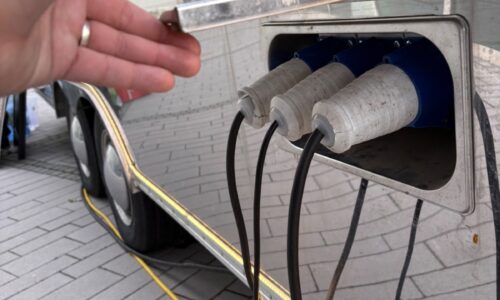
CEE (industrial connectors) – blue/red
- robust “caravan/construction” sockets,
- blue CEE is usually 230V (often 16A),
- red CEE is usually 400V (typically 16A or 32A),
- in the catering world, this is a much more reliable solution, especially for 400V.
For most catering concepts, CEE 400V (ideally 32A) is the safest choice.
Event power connections: what you’ll actually get and what to ask for
Most common options:
- 230V / 16A – the basic option, often the only one
- 230V / 32A – a stronger single-phase supply
- 400V / 16A (red CEE) – very common
- 400V / 32A (red CEE) – ideal for more demanding concepts
Mini checklist of questions for the organizer
Before the event, ask:
- What type of socket: 230V or 400V? Schuko or CEE?
- Is it 16A or 32A?
- Is the circuit only for us, or is it shared?
- What’s the distance from the connection point (for the cable)?
- Is there an RCD (residual-current device)?
How many kW does a catering trailer need? (simple calculation)
Basic rule
- 1,000 W = 1 kW
- appliances list their power input (W/kW) on the label or in the specs
- as a rule of thumb (for 230V): A ≈ W / 230
Example:
2,300 W → 2,300 / 230 ≈ 10 A
To keep a buffer, don’t calculate right on the edge. Practical guidance:
- 230V / 16A: max about 3.0 kW continuous load
- 230V / 32A: max about 6.0 kW continuous load
With 400V, the big advantage is spreading the load across three phases—so in practice you can handle more, more steadily.
Best practice: load limit per phase/circuit (practical)
When you have a 400V / 32A inlet and the trailer is split into 3 phases, the big advantage is that you can set “ceilings” for each branch.
- In theory, 1 phase at 32A is roughly: 230V × 32A ≈ 7.4 kW
- Best practice in catering: keep the continuous load on one phase more around about 5–6 kW, so you have headroom for peaks (compressor start-up, heating, switching appliances on).
Why? Because problems don’t happen at the “on-paper” values, but during peaks—when the boiler kicks in, the compressor starts, and the coffee machine begins reheating at the same time.
Practical appliance overview (approx. power draw)
Note: power draw depends on brand and model. This table is for planning.
Appliance | Approx. power draw |
Espresso machine (1–2 group) | 2.0 – 4.5 kW |
Grinder | 0.2 – 0.5 kW |
Boiler / water heating | 1.5 – 3.0 kW |
Under-counter fridge | 0.1 – 0.3 kW |
Larger fridge | 0.2 – 0.6 kW |
Freezer | 0.2 – 0.7 kW |
Ice maker | 0.3 – 0.8 kW |
Chilled beer tap system | 0.3 – 0.8 kW |
Contact grill | 1.5 – 3.5 kW |
Microwave | 1.0 – 1.5 kW |
LED lighting + small items | 0.1 – 0.3 kW |
3 sample setups: what it looks like in practice
1) Coffee trailer (1–2 people)
Typical setup:
- coffee machine 3–4 kW
- grinder 0.3 kW
- cooling 0.3–0.8 kW (depending on the number of fridges)
- boiler 2 kW
- small items + lights 0.2 kW
Why 230V is often borderline:
The coffee machine + boiler can create a peak, and cooling is running at the same time.
➡️ Recommendation: 400V (CEE), ideally 32A + split across phases.
2) Mobile bar trailer (drinks concept)
Typical setup:
- chilled beer tap system 0.5–0.8 kW
- ice maker 0.4–0.8 kW
- bar fridge 0.2–0.5 kW
- additional cooling 0.3–0.7 kW
- lighting + small items 0.2 kW
A bar often doesn’t have extreme heating loads, but it has more compressors and lots of cooling.
➡️ Recommendation: 230V may be enough for a smaller setup, but for stability at events, 400V is better.
3) Hot kitchen (grill / heating / service)
Typical setup:
- grill 2–3.5 kW
- boiler 2–3 kW
- cooling 0.5–1.5 kW
- small items
With a hot kitchen, power demand rises quickly.
➡️ Recommendation: 400V almost always, with good circuit distribution.
How we set it up in the trailer: 3 circuits / 3 phases (and why it works)
Many problems don’t happen because “there aren’t enough kW”, but because everything is on one branch.
With our standard – 400V / 32A CEE split into 3 circuits (L1, L2, L3) – you can:
- put cooling on one phase,
- heating on the second,
- work sockets/coffee machine on the third.
“Proper circuit distribution is often more important than just how many sockets you have available.”
On request, a configuration for 3× 230V can also be prepared—especially if you know you’ll often be in places where organizers can’t provide 400V CEE, or you have a very simple concept.
High-load appliances: when to consider gas (and why it makes sense)
For concepts with a hot kitchen, it’s often worth considering gas alternatives (e.g., for part of the heating). The reasons are practical:
- kW limit in the trailer – even with 400V you can hit limits, especially as you add more appliances.
- Electricity cost at festivals – some events charge significantly more for power, or set power limits.
- Self-sufficiency and flexibility – gas can simplify operations where electricity is weak or unreliable.
Electrical always custom + inspection: what it means in practice
We don’t do electrical systems in trailers “from one template”. The electrical installation is always custom-designed for a specific concept and a specific list of appliances.
In practice, that means:
- designing circuits based on what runs continuously (cooling) and what runs in peaks (heating),
- sizing protection based on real-world use,
- a design by a certified electrician in Slovakia,
- followed by a check and an electrical inspection.
Checklist before the first start-up (7 points)
- Verify the connection type: 230/400V, 16A/32A, Schuko/CEE.
- Check the cable (length, gauge, condition).
- Start cooling first and let it stabilize.
- Then switch on large appliances (heating) gradually.
- Watch what the breaker does during peaks.
- Don’t share a circuit with other stalls if you can avoid it.
- Have a plan B: what you’ll switch off when you hit the limit.
Gastronova recommendation to wrap up
If you want stable operation, future headroom, and minimal stress at events, we recommend going with a standard 400V / 32A CEE connection split into 3 circuits (1 circuit per phase) – exactly how we deliver most of our trailers.
At the same time, the right electrical setup isn’t just about the socket—it’s about having the wiring custom-designed for your appliances and concept. That’s why we do electrical installations individually – design by a certified electrician in Slovakia, followed by a check and an inspection.
And if you’re planning a hot kitchen or high loads, we also recommend considering gas alternatives – due to power limits, electricity prices at festivals, and greater self-sufficiency on site.
Want it designed without guesswork?
Check out our models and custom solutions:
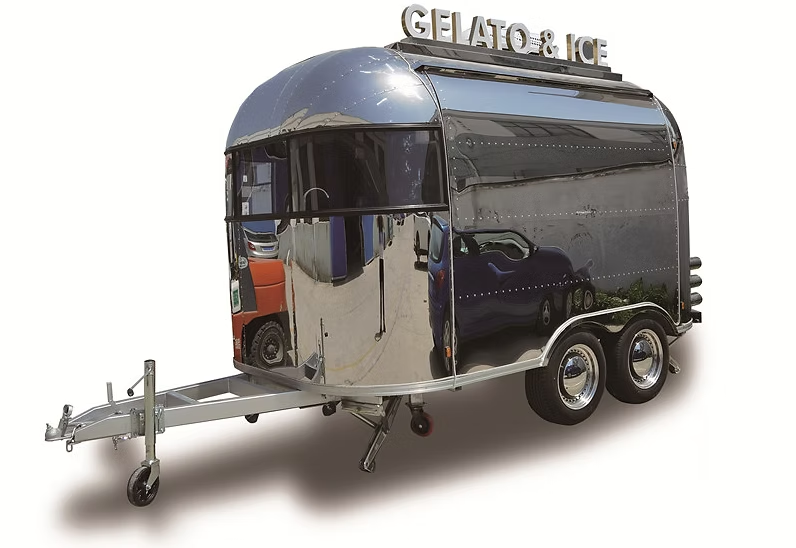
- Airstream trailers (insert link to category)
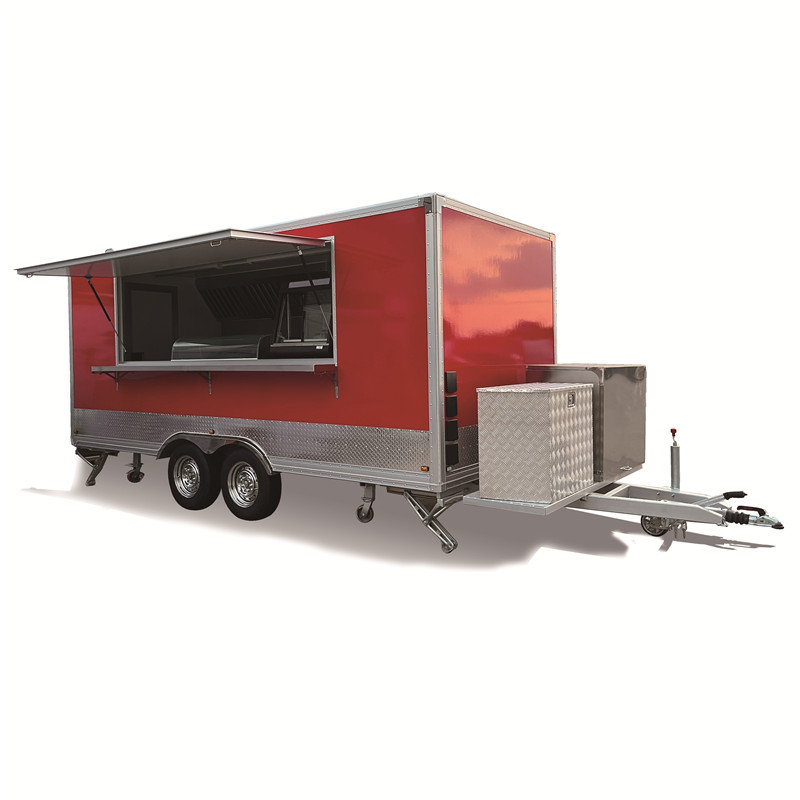
- Box trailers (insert link to category)
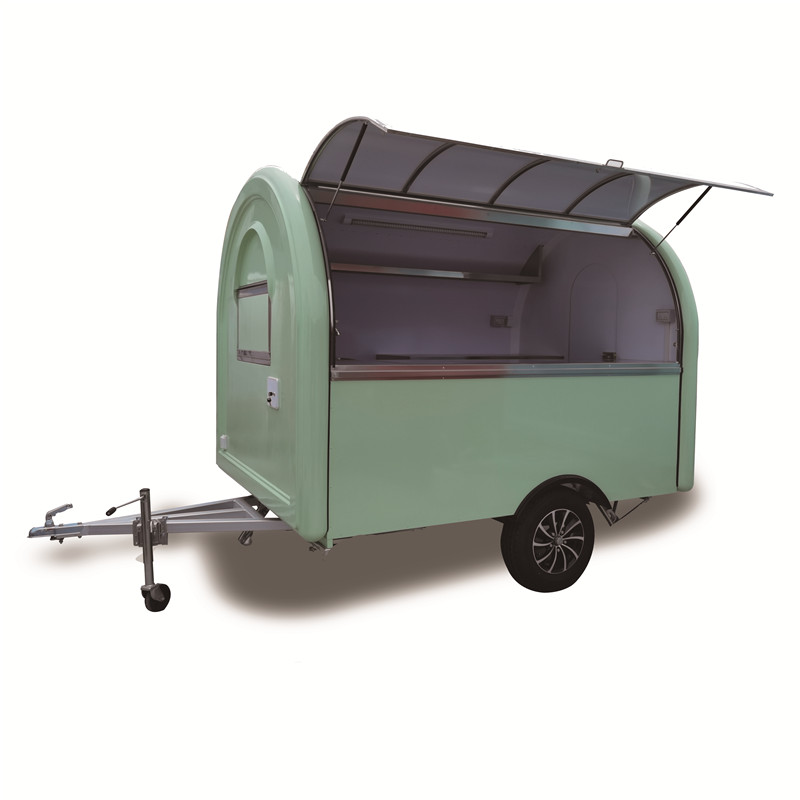
- Rounder trailers (insert link to category)
- Turnkey solutions / consulting (insert link)
- Financing (insert link)
- Contact / Inquiry (insert link)
Send us your appliance list and a short description of your concept. We’ll propose the ideal connection (400V vs 3×230V), circuit distribution, and recommendations so it won’t keep tripping at events.
