
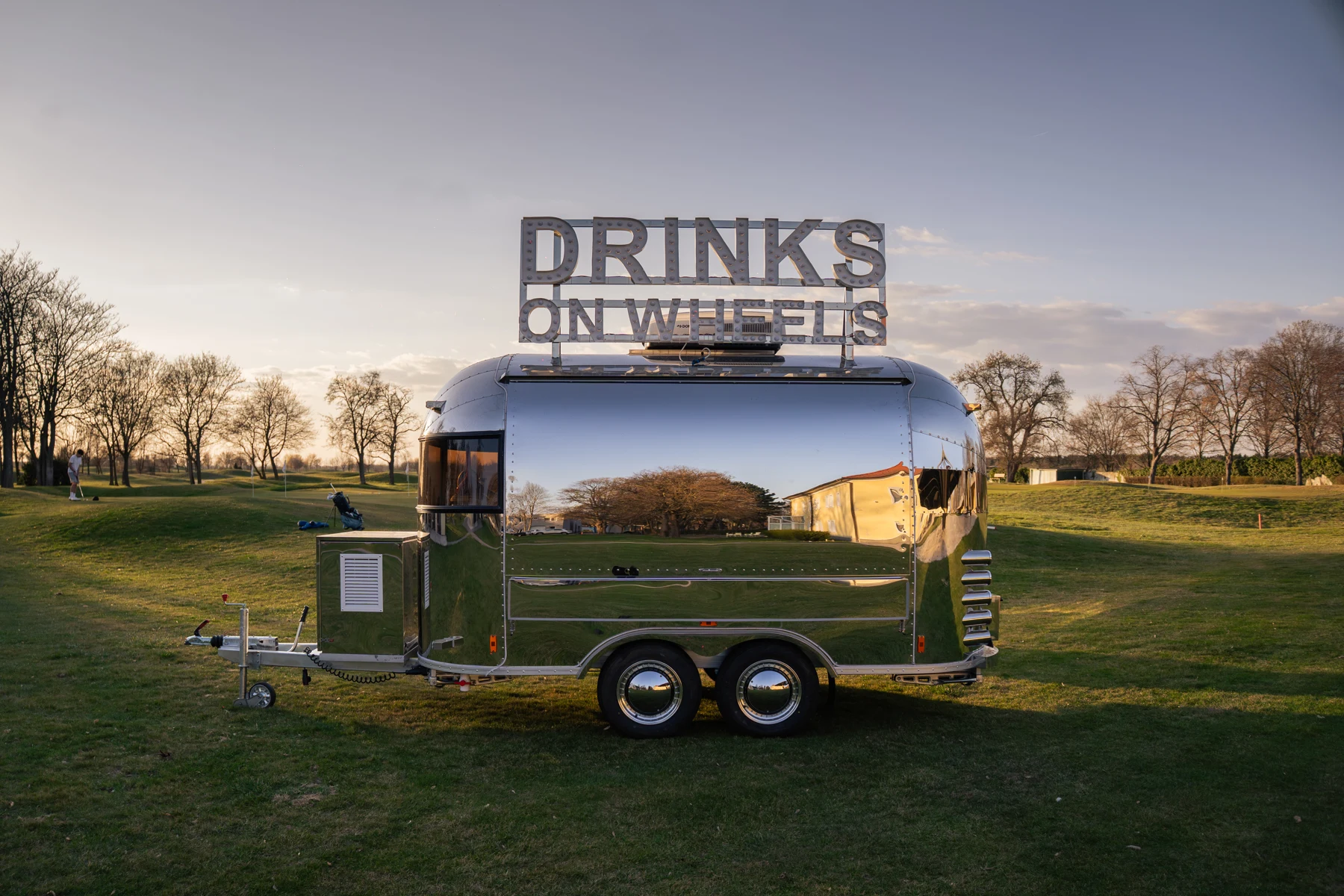
Concept bar / drink truck is one of the most attractive forms of mobile sales. If you have a good spot (weddings, festivals, corporate events, city events), food trailer or food truck it can deliver very decent numbers – often with simpler food and fewer hygiene complications than a full kitchen.
See also our page about the concept: Drink & Bar – food trailer or food truck
https://gastronova.eu/drink-bar-food-truck/

Who a drink & bar food trailer or food truck is for
A drink truck is particularly suited to:
- bartenders and people from the hospitality scene who want to go “solo”,
- businesses that want to expand their sales to events (brand activation),
- entrepreneurs who want a concept in high demand at weddings and corporate events.
It works best when you have:
- a clear event plan (weddings, festivals, corporate),
- a simple menu and fast service,
- good refrigeration, ice and logistics.
What to sell to keep it fast and profitable
With a bar in a food trailer or food truck , the winner is a simple menu that is quick to serve and has a good margin:
- mixed drinks with 5–8 signature recipes (less is more),
- beer / radler (if it makes sense),
- prosecco / wine (if it suits the events),
- non-alcoholic drinks and lemonades (important for volume),
- add-ons that do not slow you down (extra syrup, double shot, garnish).
Tip: Instead of 20 drinks, offer 8 perfectly fine-tuned ones. It speeds up service and reduces both chaos and waste.
Technical reality: what decides whether you “keep up”
With a drink truck, 3 things often make the difference:
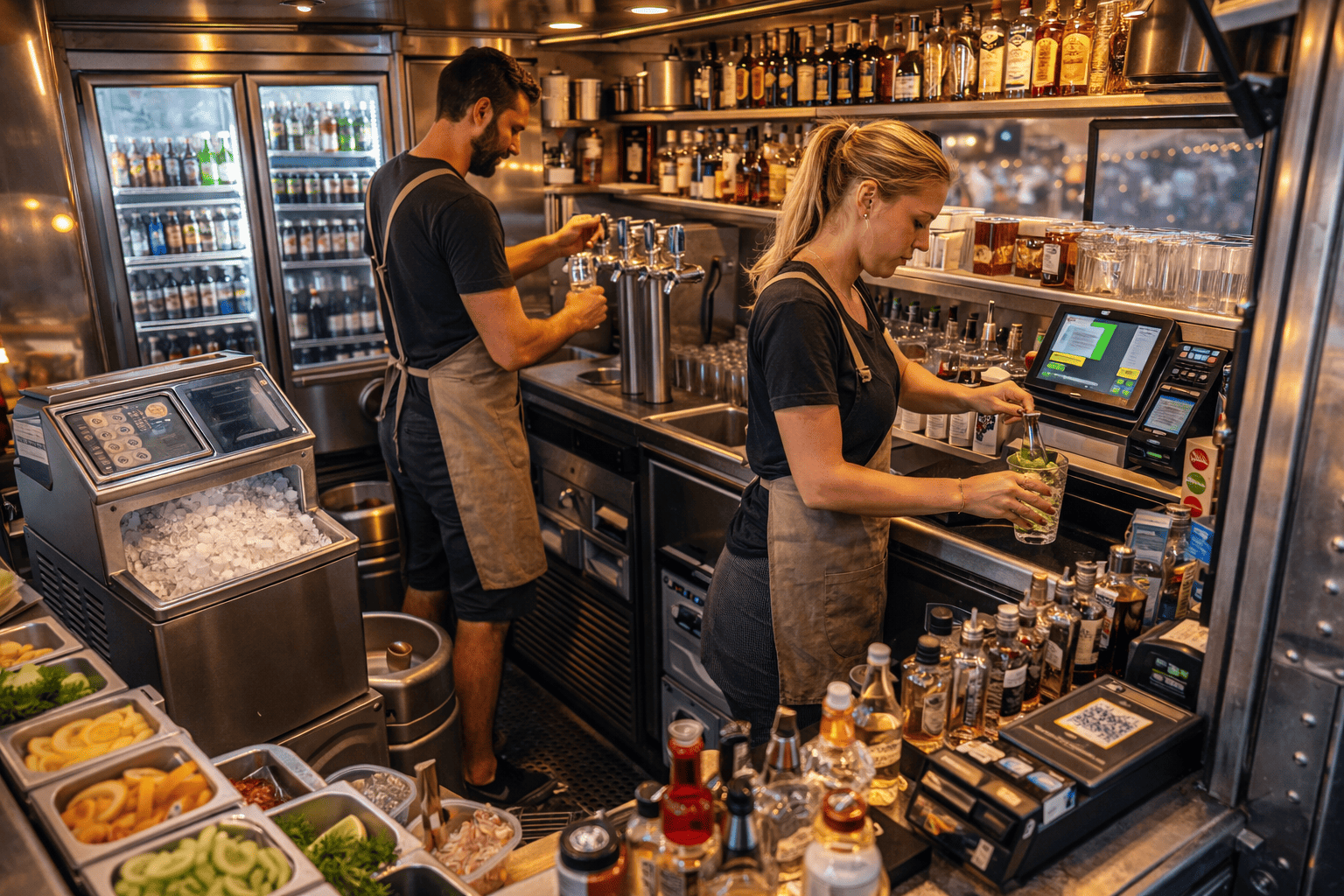
- Refrigeration (beer tap + fridges + storage)
- Ice (ice maker or ice logistics)
- Workflow (who mixes, who serves, who takes payments)
If you have a good concept but cannot keep up with service at peak times, you lose both money and customers.
Business case (model calculation from our e-book)
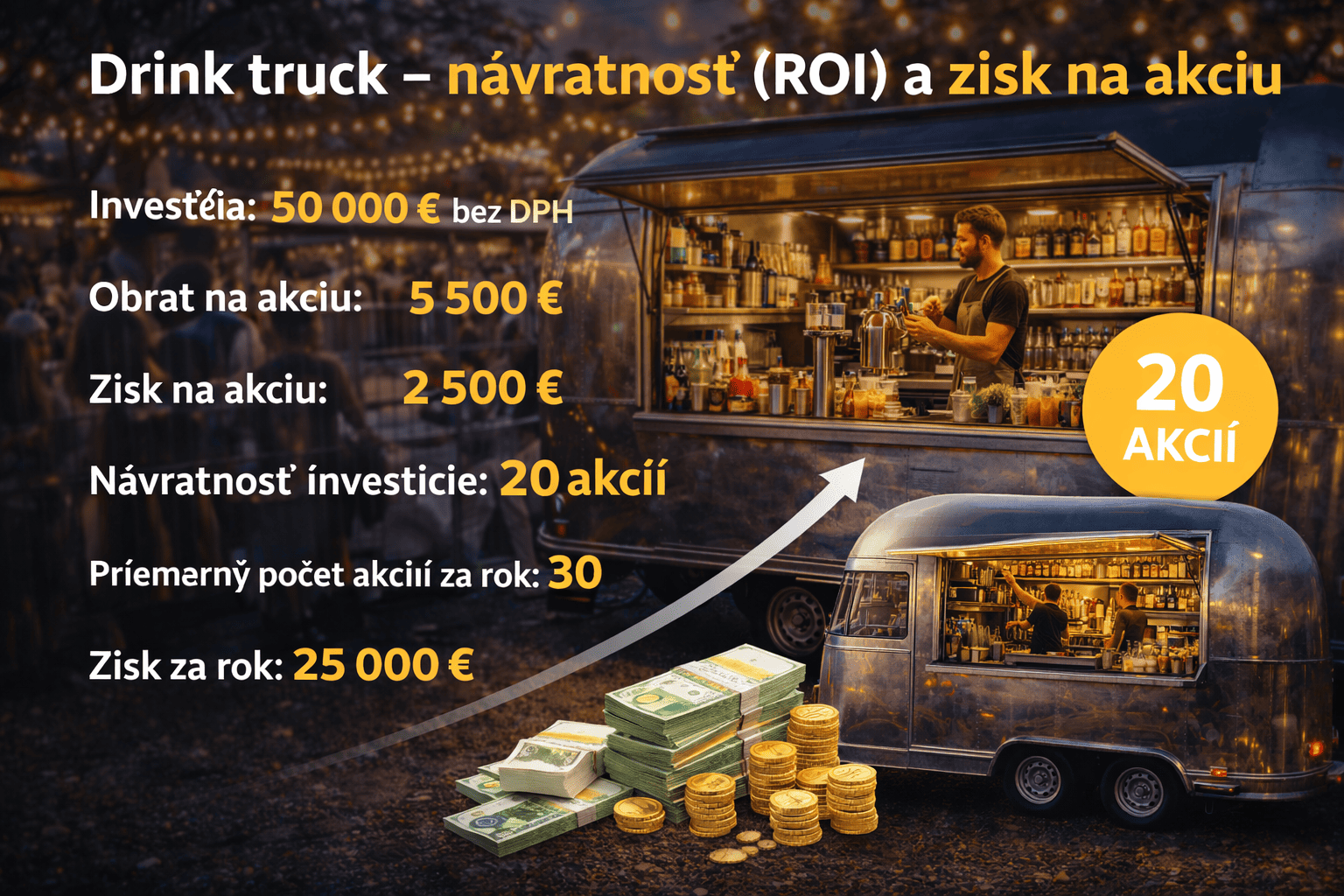
Here are model figures from our e-book for a food trailer or food truck in the drink & bar concept:
- Investment: 50 000 € excl. VAT
- Turnover per event: 5 500 €
- Profit per event: 2 500 €
- Return on investment: 20 events
- Average number of events per year: 30
- Annual profit: 25 000 €
How to read it simply: in this model scenario, the payback comes to roughly ~20 events. In practice, the type of events, speed of service, drink prices and logistics (ice/refrigeration/staff) matter most.
Download the e-book: Concepts for a food trailer or food truck
Want to compare more concepts (coffee, street food, bar…) and see indicative calculations of turnover, margin and payback? We have prepared an e-book to help you make a faster decision.
What increases the profitability of a drink & bar concept the most
1) Speed of service (drinks per hour)
A drink truck makes its money at peak times. Profit often comes not from the “most beautiful drink” but from how many you can serve per hour without mistakes.
What helps:
- prep work (syrups, garnish, measures, ready mix),
- clear roles (bar / till / service),
- fewer recipes, but fine-tuned ones.
2) A menu built on margin and simple preparation
Profit comes from a combination of:
- signature drinks with a good margin,
- simple non-alcoholic drinks (volume),
- sets and upselling (e.g. “drink + non-alcoholic for the driver”, double shot).
3) Payments and queues
At events, people walk away when the queue is too long. That is why it pays to set up payments so they do not slow things down (terminal, QR, fast till).
What to watch out for
- Ice and refrigeration – if you do not have this sorted, the whole day falls apart.
- Too broad a menu – slows down service and increases errors and waste.
- The wrong events – high fees and low attendance can kill even a good concept.
- Staff – a bar is all about people. Without a well-rehearsed team, you will go under at peak times.
Notice
The figures shown are model scenarios from our e-book. They are not a guarantee of results. Actual results depend on location, prices, weather, competition, team, type of events and sales skills.
Put simply: it is more of a “the season is going well, you are skilled, your people are under control, you are out often” scenario, not a “first year, we are learning and spending half the season looking for events” scenario.
Gastronova’s final recommendation
If you want to launch a drink & bar food trailer or food truck in a way that also makes economic sense:
- Start with reality: what events you want to do (weddings vs festivals vs corporate).
- Build your menu for speed (signature + non-alcoholic + a few safe bets), not breadth.
- First sort out ice, refrigeration and workflow – only then the “extras”.
- Do a simple calculation: how many strong events you need to pay back the investment (in our model ~20).
Concept details: https://gastronova.eu/drink-bar-food-truck/

FAQ – frequently asked questions
How much can a drink truck make at a wedding or event?
It depends on the number of guests, drink prices and speed of service. In the model scenario in our e-book, the turnover per event is 5 500 € and profit per event is 2 500 €. Actual results vary with the type of event and the fees.
What is the ROI of a bar in a food trailer or food truck?
In the model scenario, the payback comes to roughly 20 events with an investment of 50 000 € excl. VAT. In practice, what counts is the number of strong events and the net profit per event.
What drinks work best for a mobile bar?
A short menu works best: 5–8 signature drinks + simple non-alcoholic options + “safe bets” (beer/prosecco depending on the event). The key is fast preparation and consistent quality.
Why is ice so critical in a drink truck?
Ice is the foundation of speed, drink quality and stable operations. If you do not have it sorted (ice maker or logistics), you will slow down service and be stressed throughout the whole event.
What’s the biggest challenge with a bar in a food trailer or food truck?
Most often: too broad a menu, slow payments, a weak workflow, poor ice/refrigeration solutions and underestimated staffing.
Is a bar concept better for festivals or weddings?
Both can be excellent. Festivals are about volume and speed, weddings about a higher price per drink and steadier demand. The best option is a mix, to balance out seasonality.