
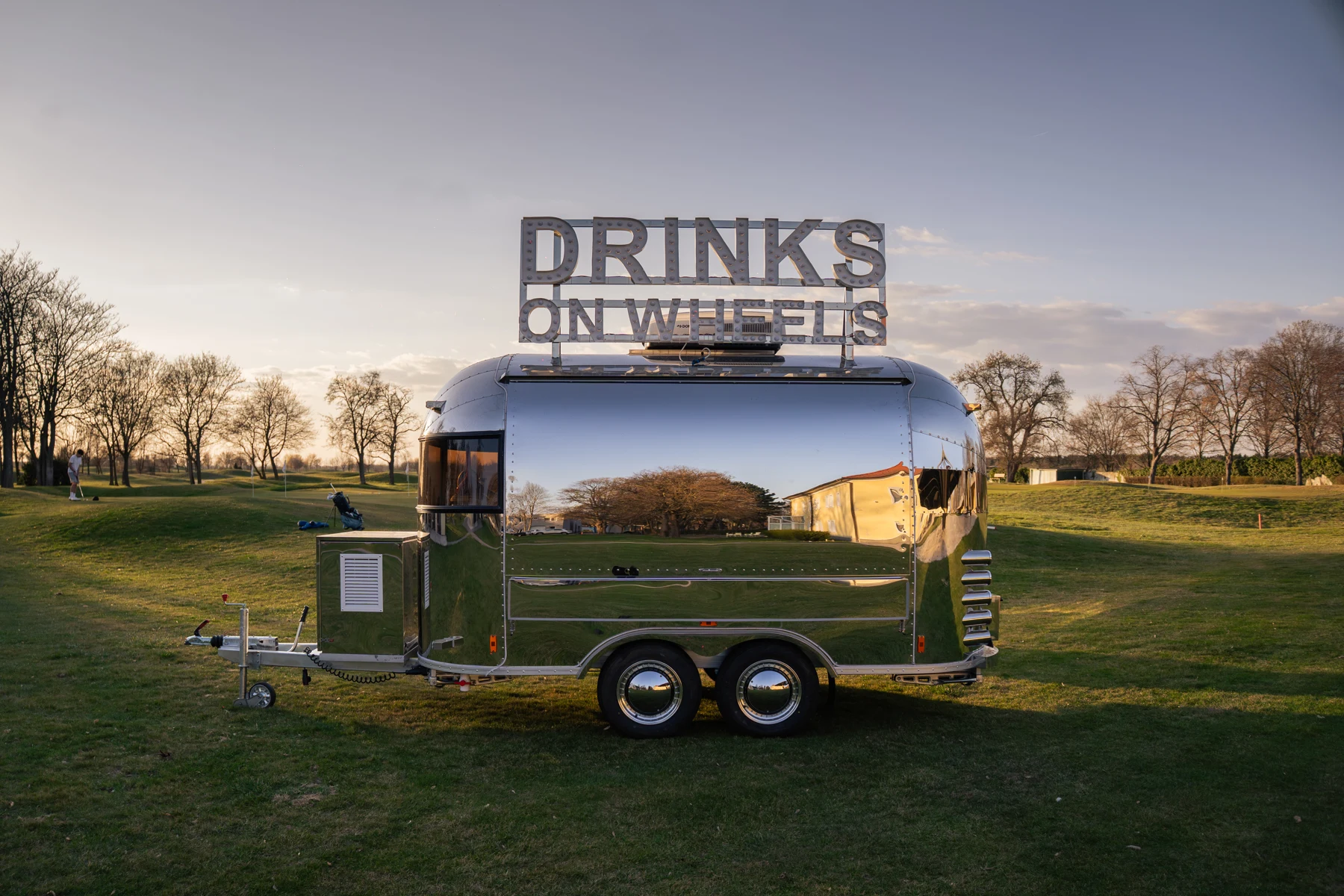
A beer tap in a food trailer or food truck can be one of the biggest sources of revenue – but only if the system is designed around reality: how much beer (or other keg drinks) you will actually pour, where you will keep the kegs and what conditions you have at events.
In this article you will find:
- what the most common types of draught systems for trailers are,
- whether it is better to keep kegs inside in the refrigeration or outside in the back area,
- and practical recommendations on how to choose a solution without unnecessary mistakes.

1) First, clarify your pouring volume: beer as the main product vs. an add-on
This is the most important decision, because it determines:
- how much beer you need to be able to chill and keep cold,
- how often you will change kegs,
- and whether it makes sense to carry kegs in/out or keep them permanently in the back area.
A) Beer is the main product (bar, festivals, big peaks)
- you need stable cooling even at high flow rates,
- you need easy keg handling,
- it often pays to keep the kegs in the back area / an external box (quick changes, more space inside),
- the system is usually designed for performance (more taps, better line cooling, a more robust pressure setup).
B) Beer is an add-on (food is the main product, beer makes up a smaller share of sales)
- the volume is usually smaller and more regular,
- a simpler solution is often perfectly sufficient,
- A keg inside in a fridge can be ideal (short lines, easy operation, fewer variables).
2) The most common draught systems for a food trailer or food truck
In practice, these groups of solutions are mainly used in trailers:
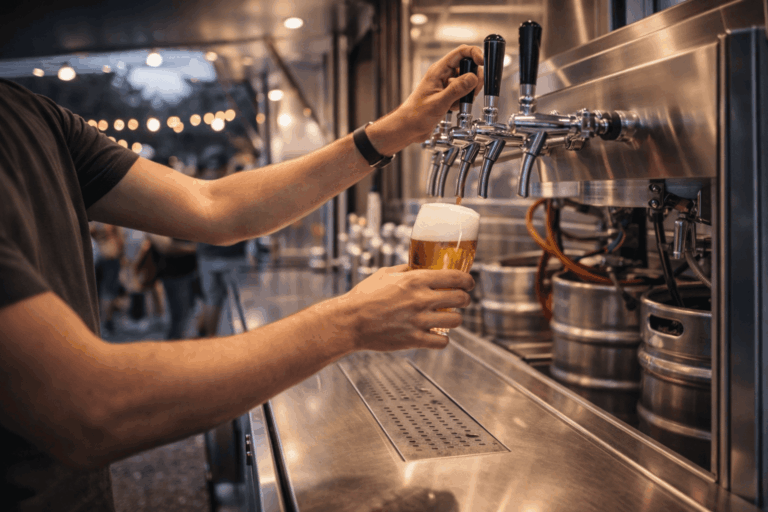
2.1 Tap with the keg in a fridge (so-called “direct draw” / kegerator)
When it makes sense:
- when beer is an add-on or you pour rather small volumes,
- you want a simple, compact system,
- you want as few “variables” as possible (long lines, insulation, additional cooling).
Advantages:
- short lines = lower risk of temperature problems along the way,
- easy setup and servicing,
- a clean, clear solution.
Disadvantages:
- takes up space inside,
- if you pour a lot and change kegs often, it can be more demanding operationally (handling, space).
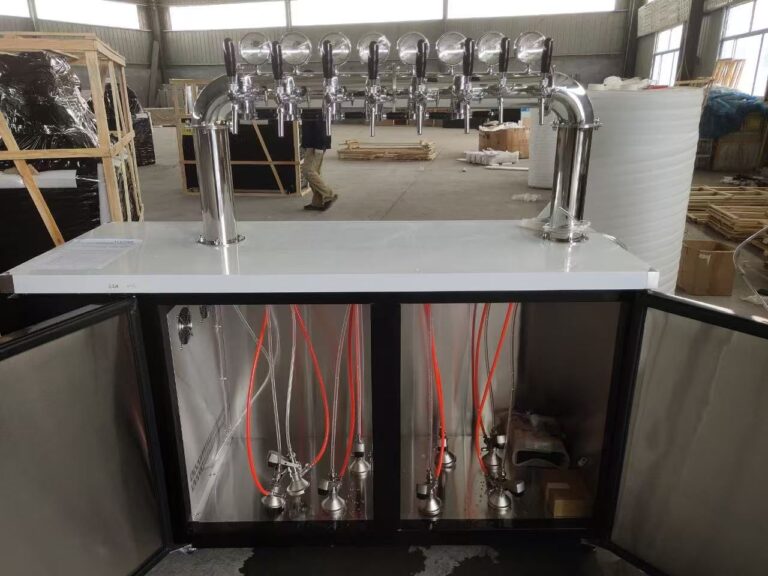
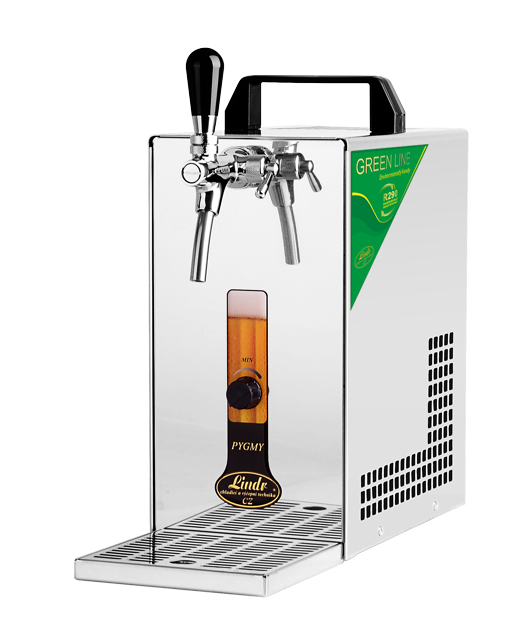
2.2 Contact / “dry” cooler (so-called dry cooler, flow-through cooler) + keg as needed
This covers solutions where the beer is cooled in a cooling block (contact cooling, “dry” – without a water bath), often also used for mobile bars at events.
When it makes sense:
- you want a more mobile system that can be set up quickly,
- typically at events where you need output but don’t want a large “built-in” system,
- when you want the equipment outside the interior (because of noise/heat).
Advantages:
- good performance for mobile use,
- can sensibly be placed in an external box too (air, noise),
- easy servicing and access.
Disadvantages:
- you still have to work out where the kegs will be (inside/outside) and keep them at a reasonable temperature,
- at extreme temperatures and high output, you need to think of the system as a whole (a stock of cold kegs, insulation).
2.3 Long draw system (kegs in the back area + lines to the taps)
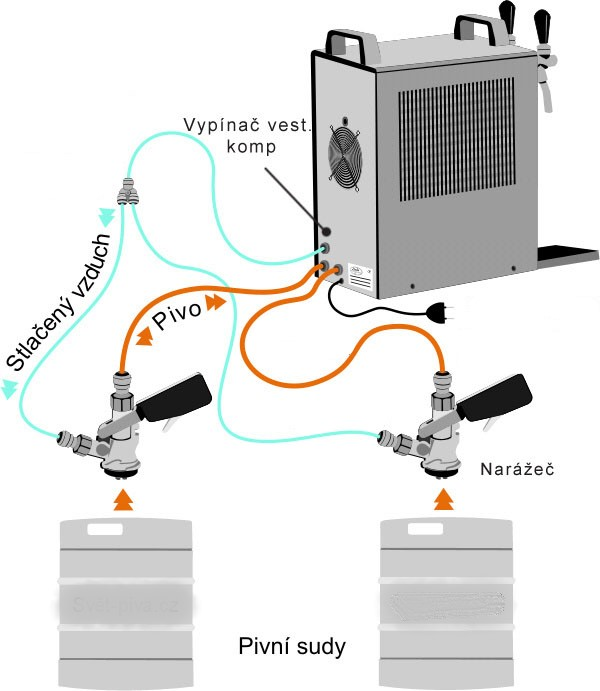
This is a solution where the kegs stand, for example, in an external box or in the rear technical section, and the beer runs through longer lines to the taps.
When it makes sense:
- when beer is the main product and you change kegs often,
- you want more room inside for the staff,
- you need more taps and a better work “flow”.
Advantages:
- easier keg changes (especially when they are outside),
- more space inside,
- suitable for higher output.
Disadvantages:
- longer lines need more careful planning (line cooling, insulation, pressure settings),
- more components = more things that have to be done right.
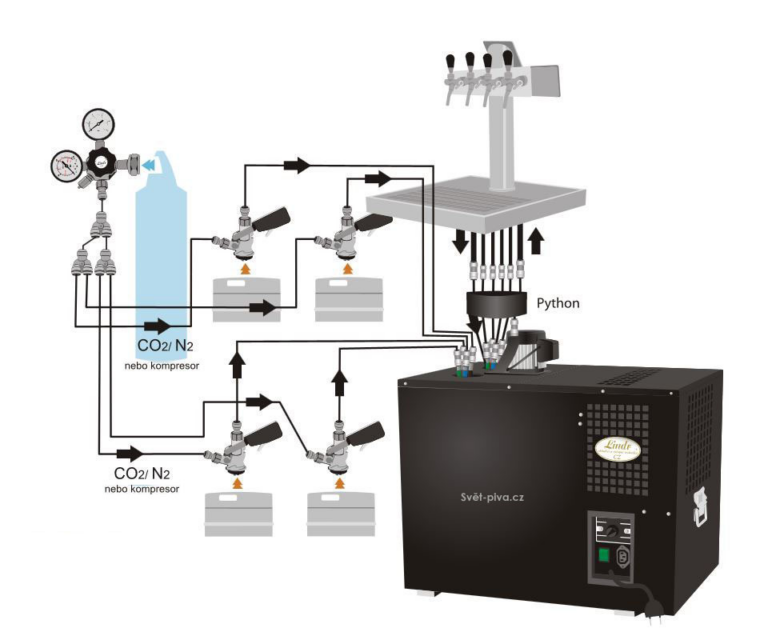
3) Kegs inside vs. outside: practical recommendations from experience
Kegs inside (in a fridge)
We recommend this when:
- you pour a smaller volume or beer is an add-on,
- you want a simple solution without complex lines,
- you want to minimise the risk of a “warm run”.
Kegs in the back area / external box
We recommend this when:
- beer is the main product and you change kegs often,
- you don’t want to carry kegs in/out during peak times,
- you need more space inside for staff,
- and you want the equipment (compressor/cooling) outside the interior.
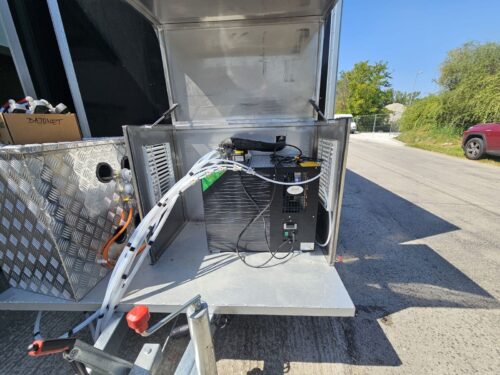
4) Why it makes sense to put the equipment in an external box (air + noise)
Regardless of the type of system, the following often applies:
- the compressor and cooling units produce heat,
- they need airflow,
- and inside they make noise that is unpleasant at the bar.
That is why we often propose placing the equipment in an external technical box:
- better cooling and more stable performance,
- less noise inside,
- easier servicing and access without disrupting operations.
5) The most common mistakes (and how to avoid them)
- Choosing a system without first clarifying the pouring volume.
- Kegs inside with large volumes – it then turns into a logistics problem.
- Long lines without well-thought-out line cooling / insulation.
- Equipment without air – overheating, lower performance, breakdowns.
- Underestimated line cleaning and maintenance routine.
Notice
Draught systems work with pressure and gas and must be designed safely and installed correctly. The details are decisive (line lengths, insulation, pressure, gas type, cooling, placement of the equipment).
Gastronova’s final recommendation
If you are planning a beer tap for a food trailer or food truck, always start with the question:Will beer be the primary product or an add-on?
- If beer is an add-on and you pour a smaller volume, a simple solution with the keg in a fridge often wins.
- If beer is the main product and you pour a lot, a solution with kegs in the back area and equipment in an external box is usually more practical (because of keg changes, space, air and noise).
- A contact/dry cooler is a good way to go when you want an event solution that is powerful and also practical to place outside the interior.
At Gastronova we can design a tailor-made beer tap system for your concept: number of taps, expected pouring volume, keg placement, external box and staff workflow.
FAQ – frequently asked questions and answers
What is the best beer tap for a food trailer or food truck?
It depends on whether beer is the main product or an add-on. If beer is an add-on and you pour smaller volumes, it is often enough to use a simple solution with a keg in a fridge (direct draw). If beer is the main product (festivals, bar), what usually makes sense is a system with kegs in the back area and more robust cooling/lines so that you can handle the peaks.
What is the difference between a keg in a fridge and a keg in the back area behind the trailer?
A keg in a fridge is easier to set up (short line), but it takes up space and with large volumes it is harder to change kegs frequently. A keg in the back area (external box) saves space inside and makes keg changes easier, but requires better planning of the lines and cooling so that the beer stays cold all the way to the tap.
When does a “dry” (contact) beer cooler make sense?
When you want a more powerful, event-friendly solution that can easily be placed outside the interior too (because of noise and heat). A dry/contact cooler is a common choice for mobile bars, especially if you need flexibility and fast service.
Why is it a good idea to put the compressor or equipment in an external box?
Because the equipment needs air to dissipate heat and inside it makes noise, which is unpleasant for staff. An external box usually improves performance stability, reduces overheating and makes servicing easier.
How many taps do I need in a trailer?
It depends on the type of events and your goal. As a rule of thumb:
- smaller add-on tap: 1–2 taps,
- beer as the main product: 2–4 taps (sometimes more).More important than the number of taps is whether you can manage keg changes and whether the cooling keeps a stable temperature at peak times.
Why does my tap foam or the pour quality fluctuate?
The most common reasons are:
- incorrect beer temperature (or a “warm run” in the line),
- incorrect pressure setting,
- unsuitable hose length/type,
- clogged lines (cleaning),
- pouring too fast with insufficient cooling.The solution is always a combination: correct cooling, the right line route and the correct pressure setting.
How often should the beer lines in a food trailer or food truck be cleaned?
It depends on how intensive your operation is, but the rule is: the more you pour, the more often you have to clean. In regular operation it is good to have a fixed cleaning routine, and at events at least a check and flush as needed (especially during breaks and storage).
What is the best recommendation for a beer tap in a trailer?
First answer: how much beer you will actually pour (main product vs. add-on). Then decide whether the kegs will be inside or in the back area. And finally, plan the placement of the equipment so that it has air and doesn’t disturb with noise. That will save you the most money and stress.