







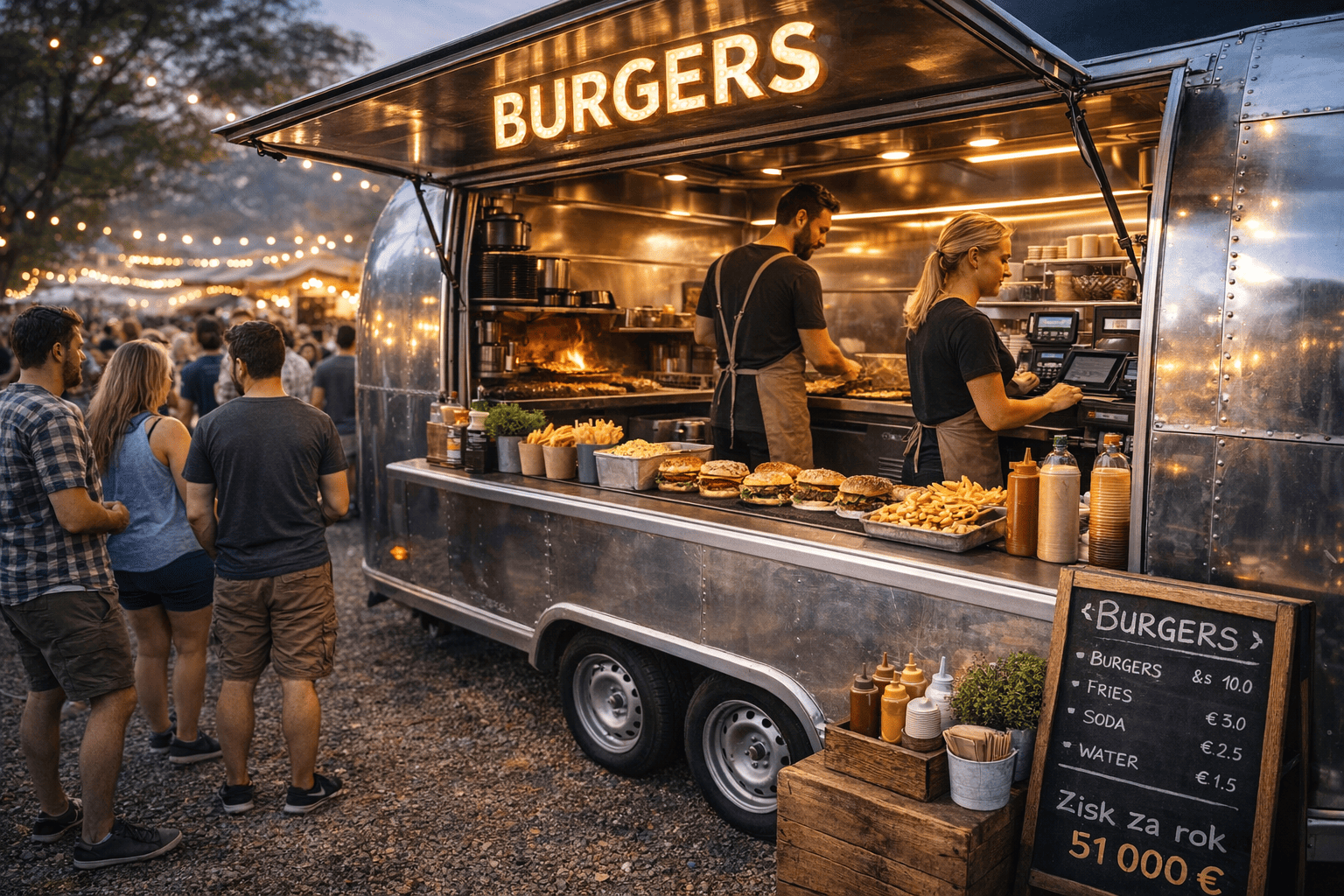
If you want your gastro trailer or food truck to generate high revenue at events, street food (burgers / pizza / kebab) is one of the most proven paths. It's a concept that can handle large volumes during peak times, and with a properly set menu and workflow, it's often among the most profitable.
Check out our concept: Burgers, pizza, kebab – gastro trailer or food truck
https://gastronova.eu/burgre-pizza-kebab/

Who is a street food gastro trailer or food truck for
Street food is ideal for:
- people who want to do events, festivals, and fast service,
- operators who already have a brand or kitchen and want to expand sales into the field,
- anyone who can maintain quality and pace even during rush periods.
It works best when you have:
- clearly defined 1–3 bestsellers,
- a stable team (at least a “core”),
- good ingredient logistics (refrigeration, prep, inventory).
A menu that delivers numbers (without killing service)
With a gastro trailer or food truck , speed of service is everything. That's why we recommend building your menu like this:
- 2–3 main items (e.g., 2 types of burgers / 2 types of pizza / 1–2 kebab variants),
- 1–2 “easy” sides (fries, coleslaw, dip),
- 1–2 quick drinks,
- add-ons without slowing down (extra cheese, bacon, dips, “menu set”).
Recommended setup and capacity
Street food needs:
- reasonable workspace,
- adequate refrigeration and storage,
- ergonomic service (so you don't bottleneck orders),
- equipment that can handle peak times without breakdowns.
With street food, workflow and layout make a bigger difference than another appliance.

Business case (model calculation from our e-book)
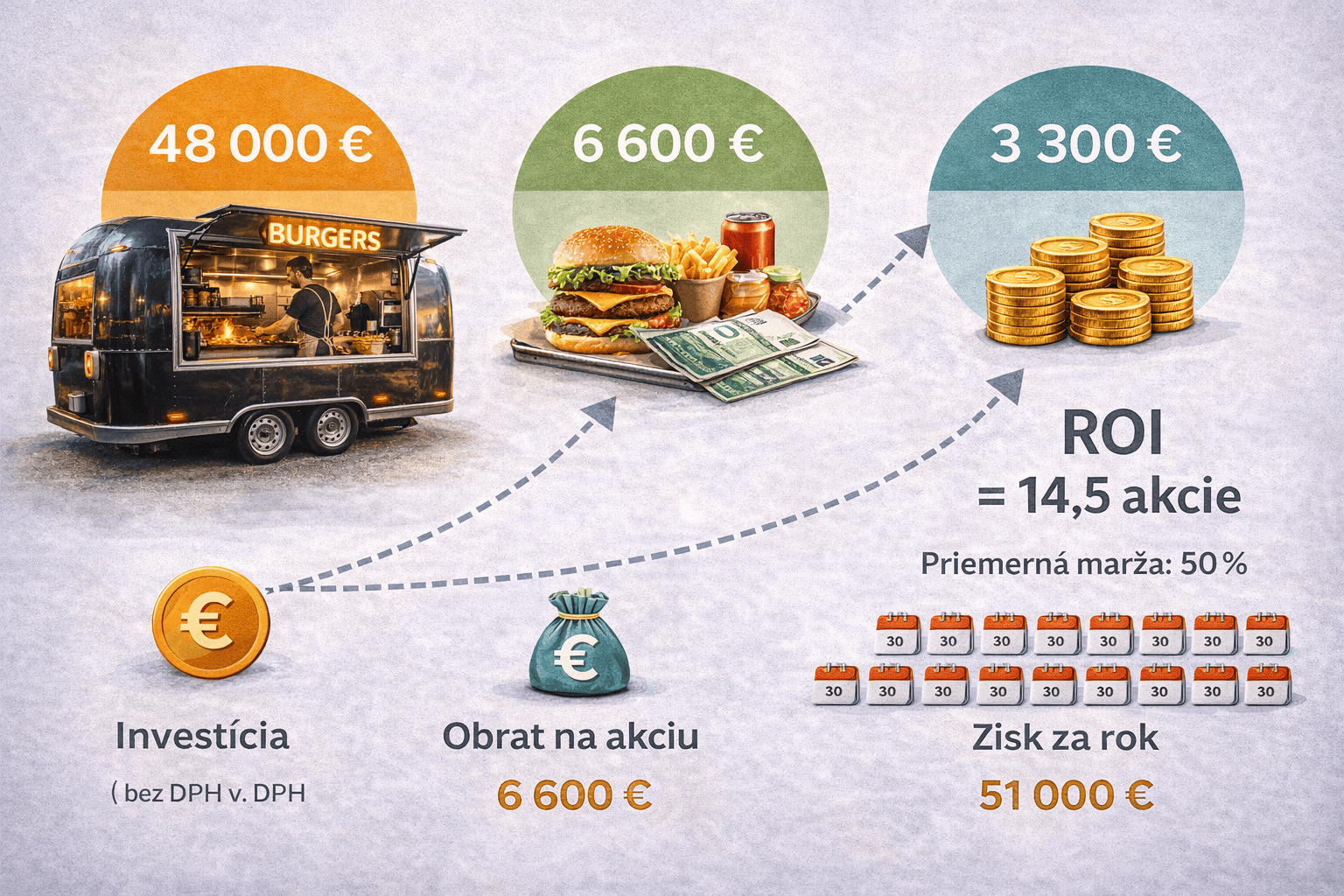
Here are the key numbers from our e-book for a gastro trailer or food truck in a street food concept (burgers/pizza/kebab):
- Investment: €48,000 excl. VAT
- Revenue per event: €6,600
- Profit per event: €3,300
- Average margin: 50%
- Return on investment: 14.5 events
- Average number of events per year: 30
- Profit per year: €51,000
How to read this simply: In this model scenario, the payback period works out to approximately ~14–15 events. What matters most, however, is whether you can realistically deliver enough strong days and whether your service can keep up with peak times.
Download the e-book: Concepts for gastro trailers or food trucks
Want to see more concepts and model calculations (coffee, street food, bar…) and compare them? We've prepared an e-book to help you make a faster decision.
How to set up your street food concept properly (and not waste money on unnecessary things)
With street food, it's extremely important that the concept is built on reality: what events you do, how many people you expect, what team you have, and what you can realistically serve per hour.
Therefore, at Gastronova, we recommend approaching street food as a “tailored concept” – from menu, through workflow, to technology and layout:
https://gastronova.eu/sluzby/gastro-koncept-na-mieru/
We're also helped by our partner Streetfood Service, who has practical know-how from street food operations and can help especially with menu, processes, and operation setup.
What increases the profitability of a street food gastro trailer or food truck the most
1) Speed of service (portions per hour)
Street food wins during peak times. Even if you have a great product, if you can't keep up, you're leaving money on the table. What helps:
- prep work (mise en place),
- clear roles (grill / assembly / register),
- as few steps as possible for bestseller items.
2) Sets and add-ons without slowing down
- a “menu” (main item + side + drink),
- extra add-ons (extra cheese, bacon, dip),
- quick sides with good margins.
3) Ingredient and waste control
Profit is often made by:
- portion control,
- simple storage,
- ingredient rotation,
- ongoing price adjustments when costs rise.
What to watch out for
- Overcomplicated menu = slow service and chaos.
- Weak equipment = downtime during peak times.
- Poor ingredient logistics = shortages, waste, stress.
- Weak events = high fees and low sales.
Warning
The numbers shown are model scenarios from our e-book. They are not a guarantee of results. Real results depend on location, pricing, weather, competition, team, type of events, and sales ability.
Simply put: it's more of a scenario where “the season is going well, you're skilled, you have people under control, you're often present,” not a scenario where “it's the first year, we're learning, and we're looking for events for half the season.”
Gastronova's final recommendation
If you want to launch a street food gastro trailer or food truck (burgers/pizza/kebab) in a way that makes economic sense:
- Start with reality: where you'll be selling and what peak times you want to capture.
- Set your menu for speed (bestsellers + sets), not breadth.
- Build your layout to support workflow – portions per hour is the key KPI.
- Calculate conservatively: events aren't the same every weekend and weather can make a big difference.
- If you want to save time and money, get a custom gastro concept (menu, workflow, equipment, layout): https://gastronova.eu/sluzby/gastro-koncept-na-mieru/
FAQ – frequently asked questions
How much can a burger food truck make?
In our model scenario from the e-book, revenue per event is €6,600 and profit per event is €3,300 with an average margin of 50%. In practice, attendance, speed of service, pricing, and event fees are what matter.
What is the ROI of a street food trailer or food truck?
In the model scenario, the payback period is approximately 14.5 events with an investment of €48,000 excl. VAT. In reality, it depends mainly on the number of strong sales days.
How many portions do I need to sell to be profitable?
It depends on the price per portion, margin, and event costs. The best approach is to calculate profit per portion and then work out your break-even point based on location fees, staff, and utilities.
What's more profitable: burgers or pizza in a food truck?
Both concepts can be very profitable. The main factors are speed of service, food cost, waste, and the types of events you do. A burger often has an advantage with a quick “menu set,” while pizza can win if you have efficient production and service.
Why does street food perform best at events?
Because street food makes the most money during peak times – when there's high attendance and you can serve many portions in a short time. At weak events, it doesn't work as well.
What's the biggest challenge in street food trailers/food trucks?
Most commonly: slow service, overcomplicated menu, equipment downtime, and poor prep/ingredient logistics. That's why it pays to build your operation on simplicity and speed.
